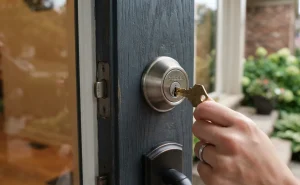

Is your door lock not opening in Melbourne? Identify likely latch, alignment or cylinder faults before forcing the key and causing more damage.
A turning key only confirms that part of the mechanism is moving. The latch, bolt, cylinder, handle or door alignment may still prevent entry, and additional force can turn a repairable fault into a broken key or damaged lock.
Why Can A Key Turn Without Opening The Door?
A door lock not opening can have several causes. The key may rotate while a worn internal component fails to move the latch or bolt. The door may have dropped on its hinges, placing pressure on the locking point, or the latch may no longer align with the strike plate. Our residential locksmith services include lock repair and replacement, but we assess the actual failure before recommending either option.
What Can You Check Without Forcing It?
Stop if the key bends, catches or requires increasing pressure. Safe observations can help us understand the fault without teaching bypass methods or risking further damage:
- Try an authorised spare key: A worn or distorted key may be the problem. If the spare behaves differently, photograph both keys and stop using the damaged one.
- Observe the door position: Note whether the lock works when the door is open but binds when closed. This may indicate alignment or pressure at the latch or bolt.
- Check the handle movement: Tell us whether the handle feels loose, drops without retracting the latch or operates normally from only one side.
- Look for visible damage: Photograph a loose cylinder, damaged strike plate, forced-entry marks or debris. Do not insert improvised tools or lubricant unless a locksmith confirms it is appropriate.
- Record when the fault began: Weather movement, a recent impact, building work or gradually worsening resistance can help distinguish an alignment issue from internal wear.
When Should You Stop Using The Key?
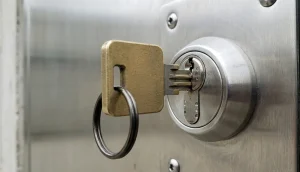
Stop immediately if the key is bent, cracked, partly inserted or close to snapping. Our article on professional broken-key extraction explains why forcing a damaged key can complicate the job. If the key has already broken inside the cylinder, leave the fragment in place and send us a clear photograph.
Does The Lock Need Repair, Rekeying Or Replacement?
Repair may suit a serviceable lock with a correctable mechanical or alignment fault. Rekeying changes which key operates a compatible lock but does not repair every damaged component. Replacement may be more practical where the hardware is worn, compromised or unsuitable for the door. Our guidance on rekeying after a change of occupancy provides context, while the final recommendation depends on inspection.
A functioning lock is also only one part of door security. Victoria Police home burglary guidance recommends securing external doors and other access points. We therefore consider reliable operation and the door’s security role rather than restoring movement at any cost.
What Information Helps Us Assess The Fault?
Send the suburb, door location, lock brand if visible, photographs, a short video of the handle and key movement, and whether the door is currently open, closed or securing an occupied property. If the key is visibly worn rather than the lock malfunctioning, our article on when to consider key replacement addresses that different service need.
Request The Right Lock Repair In Melbourne
Do not keep turning the key until it snaps. Contact Altona Locksmiths with the fault details or call (03) 9315 0522. We will ask targeted questions, confirm whether an onsite assessment is appropriate and discuss repair, rekeying or replacement based on the lock and door—not a generic one-solution quote.